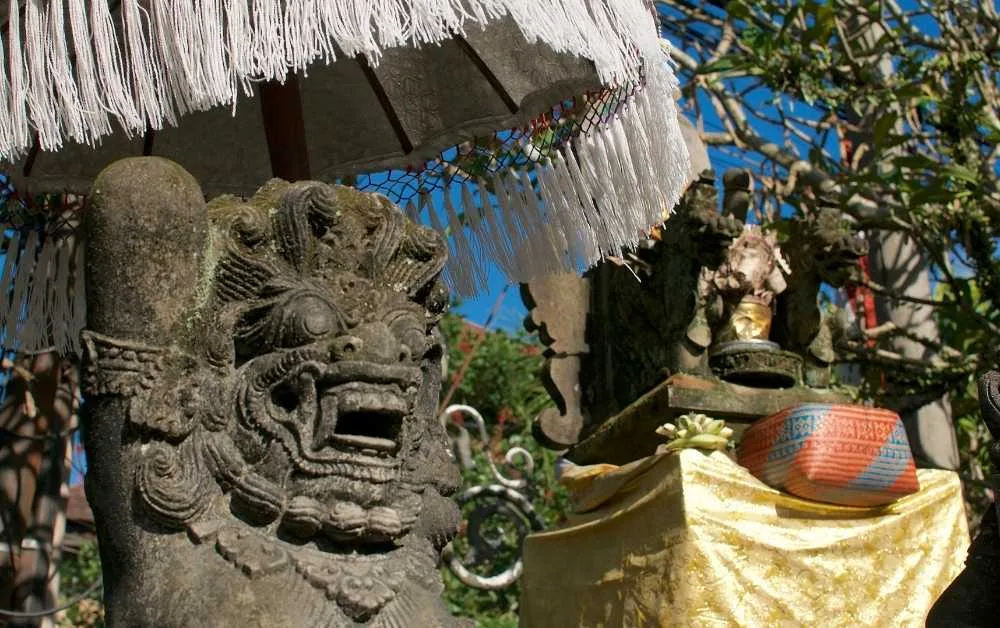
Exploring the Mystique of Dwarapala Statues in Ubud: Guardians of Your Home and Heart
%22%3E%3Cstop%20offset%3D%220%22%20stop-color%3D%22hsl(195%2085%25%2093%25)%22%2F%3E%3Cstop%20offset%3D%221%22%20stop-color%3D%22hsl(213%2080%25%2090%25)%22%2F%3E%3C%2FlinearGradient%3E%3C%2Fdefs%3E%3Crect%20width%3D%2264%22%20height%3D%2264%22%20fill%3D%22url(%23g)%22%2F%3E%3Cpath%20d%3D%22M32%2010l22%2022-22%2022L10%2032z%22%20fill%3D%22hsl(195%2065%25%2048%25)%22%20opacity%3D%220.85%22%2F%3E%3Cpath%20d%3D%22M32%2022l10%2010-10%2010-10-10z%22%20fill%3D%22hsl(15%2060%25%2052%25)%22%2F%3E%3C%2Fsvg%3E)
Ubud, known for its lush landscapes and spiritual vibe, often greets visitors with a striking pair of stone guardians known as Dwarapala statues. These formidable figures, found at temple entrances and even in local homes, are more than just decorative elements-they serve as protectors and guides, embodying the rich cultural heritage of Bali.
Dwarapala statues are derived from the words 'Dwara,' meaning door, and 'Pala,' meaning guardian, making them the literal guardians of the door. Their fierce yet friendly appearances, with bulging eyes, prominent fangs, and club-holding stances, are designed to ward off both physical and spiritual disturbances. In Balinese tradition, these statues come in pairs, each with its own unique characteristics, reflecting the philosophy of duality, known as Rwa Bhineda. For instance, the famous husband-and-wife pair of Pan Brayut and Men Brayut, or the father-son duo of Merdah and Tualen, are commonly seen guarding sacred spaces.
Placement and significance vary, with the masculine Dwarapala on the left symbolizing the upper realm, and the feminine on the right representing the lower realm. These statues are integral to Balinese Hindu practices, where offerings are made as a sign of gratitude. Even in homes without visible Dwarapala, offerings are made at the entrance to honor the unseen protectors.
For expats and digital nomads in Ubud, understanding the cultural significance of Dwarapala can enhance your appreciation of the local environment. Whether you're decorating your home or exploring ancient temples, these guardians remind us of the deep spiritual roots that enrich our daily lives in this enchanting corner of Bali.
报告问题
帮助我们改进信息内容
报告已提交
感谢你帮助我们保持 ExpatsList 内容的准确与可信。我们将在 24 小时内审核你的报告。
提交失败
出了点问题,请重试,或直接与我们联系。
需要登录
请登录后再报告问题。这有助于我们在需要时跟进你的报告。


