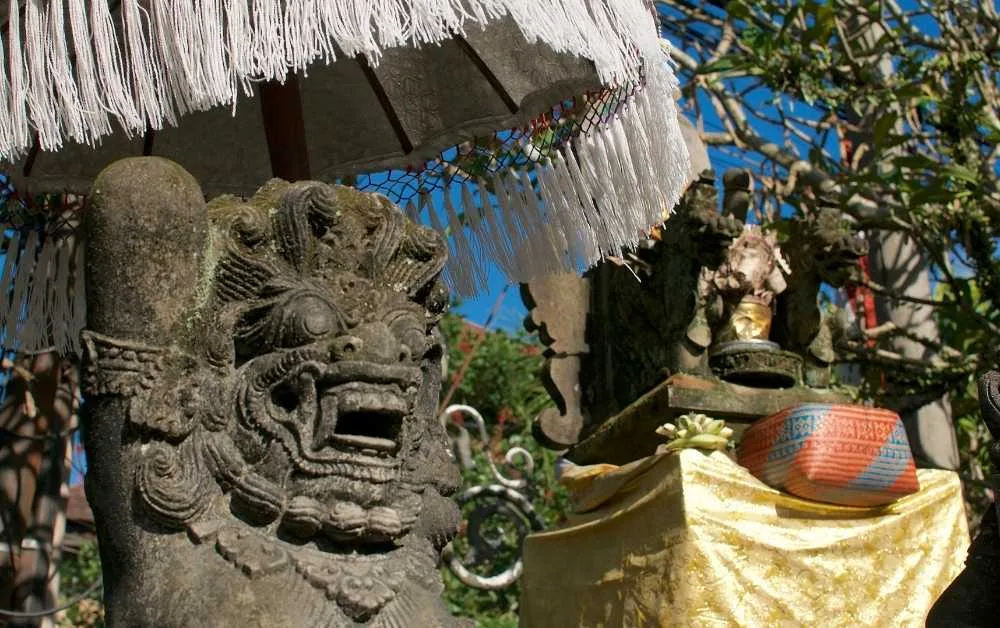
Exploring the Mystique of Dwarapala Statues in Ubud: Guardians of Your Home and Heart
%22%3E%3Cstop%20offset%3D%220%22%20stop-color%3D%22hsl(195%2085%25%2093%25)%22%2F%3E%3Cstop%20offset%3D%221%22%20stop-color%3D%22hsl(213%2080%25%2090%25)%22%2F%3E%3C%2FlinearGradient%3E%3C%2Fdefs%3E%3Crect%20width%3D%2264%22%20height%3D%2264%22%20fill%3D%22url(%23g)%22%2F%3E%3Cpath%20d%3D%22M32%2010l22%2022-22%2022L10%2032z%22%20fill%3D%22hsl(195%2065%25%2048%25)%22%20opacity%3D%220.85%22%2F%3E%3Cpath%20d%3D%22M32%2022l10%2010-10%2010-10-10z%22%20fill%3D%22hsl(15%2060%25%2052%25)%22%2F%3E%3C%2Fsvg%3E)
Ubud, known for its lush landscapes and spiritual vibe, often greets visitors with a striking pair of stone guardians known as Dwarapala statues. These formidable figures, found at temple entrances and even in local homes, are more than just decorative elements-they serve as protectors and guides, embodying the rich cultural heritage of Bali.
Dwarapala statues are derived from the words 'Dwara,' meaning door, and 'Pala,' meaning guardian, making them the literal guardians of the door. Their fierce yet friendly appearances, with bulging eyes, prominent fangs, and club-holding stances, are designed to ward off both physical and spiritual disturbances. In Balinese tradition, these statues come in pairs, each with its own unique characteristics, reflecting the philosophy of duality, known as Rwa Bhineda. For instance, the famous husband-and-wife pair of Pan Brayut and Men Brayut, or the father-son duo of Merdah and Tualen, are commonly seen guarding sacred spaces.
Placement and significance vary, with the masculine Dwarapala on the left symbolizing the upper realm, and the feminine on the right representing the lower realm. These statues are integral to Balinese Hindu practices, where offerings are made as a sign of gratitude. Even in homes without visible Dwarapala, offerings are made at the entrance to honor the unseen protectors.
For expats and digital nomads in Ubud, understanding the cultural significance of Dwarapala can enhance your appreciation of the local environment. Whether you're decorating your home or exploring ancient temples, these guardians remind us of the deep spiritual roots that enrich our daily lives in this enchanting corner of Bali.
문제 신고하기
더 나은 게시물을 위해 도와주세요
신고가 접수되었습니다
ExpatsList를 정확하고 신뢰할 수 있게 유지하는 데 도움을 주셔서 감사합니다. 24시간 이내에 신고 내용을 검토하겠습니다.
제출 오류
문제가 발생했습니다. 다시 시도하시거나 저희에게 직접 문의해주세요.
로그인이 필요합니다
문제를 신고하려면 로그인해주세요. 필요한 경우 신고 내용을 추적하는 데 도움이 됩니다.


