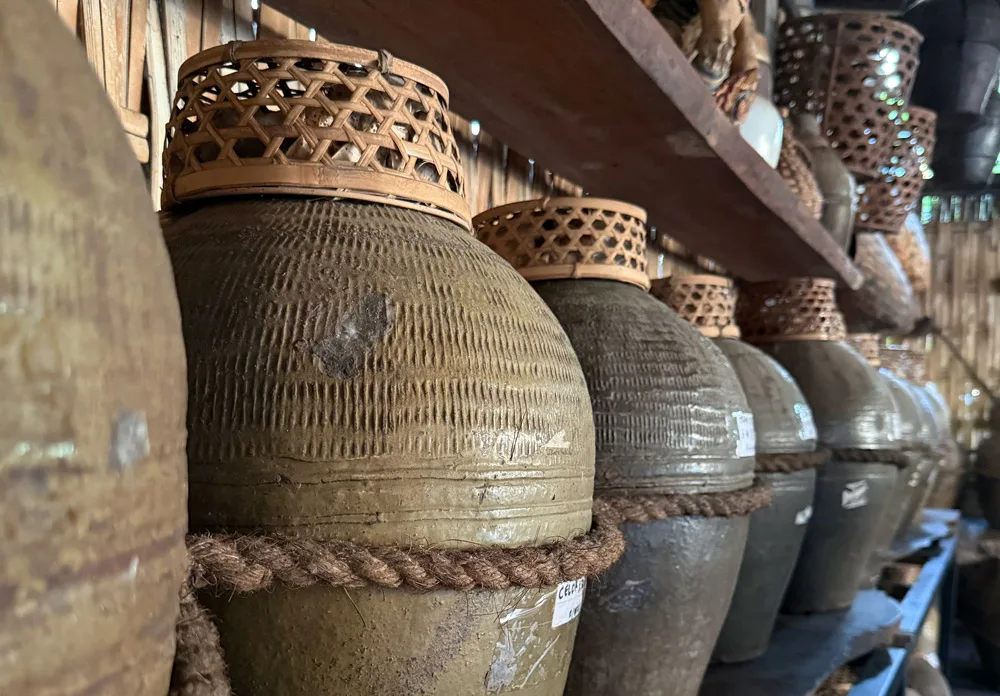
Exploring the Flavorful Roots of Arak in Ubud and Beyond
For those of us living in Ubud, Bali, or visiting, the local arak scene has long been a fascinating exploration of tradition and creativity. As a resident since 2016, I've noticed how the journey of discovering arak in Bali has evolved, much like the spirit itself.
Recent excursions across Bali with arak enthusiasts Daniel Schwizer and his wife Elissa Gjertson offer a glimpse into the diverse world of arak, from its historical roots to its modern interpretations. The original Balinese term 'Sajeng Rateng' refers to a distilled palm wine, but the term now encompasses a wide array of spirits made from various ingredients.
One of the highlights of the trip was a visit to Dapur Mula Desa Les Bali, where Chef Yudi crafts traditional arak using a time-honored process. The intricate steps, from fermenting the palm sap to distilling it over open flames, reveal the labor-intensive artistry behind each bottle. The process is not only a sensory experience but also a cultural one, as we learned about the medicinal properties of the lontar fruit and the daily rituals of the arak makers.
Another stop, Karusotju in Tabanan, showcased a more modern approach to arak production, blending Japanese shochu techniques with local sweet potato ingredients. This visit highlighted the ongoing evolution of the arak landscape, where tradition meets innovation.
These experiences remind us that exploring arak is not just about the drink; it's about the journey through the villages and the stories behind the bottles. Whether you're a seasoned expat or a curious visitor, venturing into the world of arak offers a deeper connection to the local culture and traditions.
Found this helpful?
Join the conversation. Share your own tips, experiences, or questions with the community.
Help us improve our listings
Thank you for helping us maintain quality listings. We'll review your report shortly.
Something went wrong. Please try again.
Please sign in to report an issue. This helps us follow up on your report if needed.


