Panama's Digital Driver's License: What You Need to Know
Panama's digital driver's license is a smartphone-based ID with full legal validity, requiring a physical Panamanian license and working offline after setup through an official app.
Stories and guides from Panama City expats
Panama's digital driver's license is a smartphone-based ID with full legal validity, requiring a physical Panamanian license and working offline after setup through an official app.
Best Panama banks for expats: Banco Nacional (largest network), Banistmo (established), Multibank (expat-friendly). Morgan for high-net-worth.
US credit score does not transfer to Panama - you start fresh. Panama uses ACODEC, not FICO. Build credit with secured loans, bank accounts, on-time payments.
Shipping to Panama: use UPS or DHL ($50-200+, 3-7 days). Avoid postal for valuables. Import duties apply over $100 declared value.
Panama has cooperativas, not credit unions-no deposit insurance, no ATM access, occupation-specific membership. Use commercial banks for daily banking.
"Linea blanca" in Panama includes stove, refrigerator, and washing machine-the 3 essential appliances in most rentals. Know what to expect when apartment hunting.
Panama Law 6 gives retirees (women 55+, men 60+) legally mandated discounts: 50% off entertainment, 25-50% off hotels, 25% off utilities, 20% off pharmacy and medical, and 25% off restaurants. A retiree couple can save $3,000-5,000 annually.
Best Panama City neighborhoods for expats: Casco Viejo ($1,000-2,500), Amador ($1,500-3,000), Punta Pacifica ($2,000-5,000+). Safety and lifestyle guide.
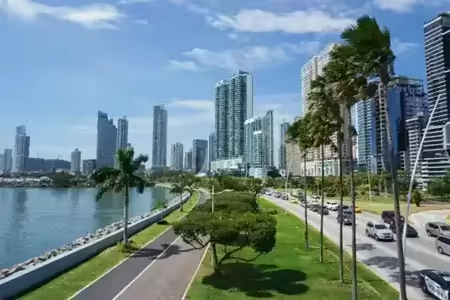
Panama City expat life: $1,500-2,500/month, world-class healthcare, year-round tropical weather, multiple visa options. Cons: slow bureaucracy, traffic.
Panama City infrastructure: reliable electricity ($80-150/month, rare outages), fiber internet 50-100 Mbps ($30-50/month, adequate for remote work), tap water technically drinkable (most use filters, $15-30/month), world-class hospitals, modern metro, sophisticated banking. Among most developed in Latin America.
Panama work: most expats work remotely for foreign companies. Local jobs in banking, tourism, teaching English. Business requires Investor visa. Good timezone overlap.
Integrate into Panama City by learning Spanish, attending local events, and building relationships beyond the expat bubble. Effort and patience required.
Panama City nightlife: Casco Viejo bars/clubs, rooftop venues, Amador waterfront. Beer $1.50-3, cocktails $3-7, club entry $0-20. Full night out $30-50/person.
Panama City healthcare costs 50-75% less than US prices: doctor visits $30-60 vs. $150-300, MRI scans $300-500 vs. $1,200-3,000, with internationally accredited hospitals and English-speaking doctors.
Panama City food is world-class yet affordable-fine dining $40-60/person for 3-course dinner with wine (vs $80-120+ in North America), street food $1-5/meal (ceviche, empanadas, ropa vieja), fresh Pacific/Caribbean seafood daily, authentic Asian/Middle Eastern/European cuisines from multicultural population. One of Latin America's best food destinations for expats.
Panama City traffic is the #1 complaint: 15-min drives take 2hrs during rush hour (7-11AM, 4-7PM). Solution: Uber ($3-8), Metro (35¢), live near work, avoid peak times.
Yes, Panama City is safer than most Latin capitals-violent crime lower than Miami/Houston. Safe zones: Costa del Este, Casco Viejo. Avoid: El Chorrillo, Calidonia.
No, Panama City is not cheap: $2,150-$3,200/month minimum, $3,450-$4,900 comfortable. Safe housing $1,500+, car $400-$600, more expensive than Mexico City.
US expats: Panama is safer than most US cities, world-class private healthcare (clinic visits $2-11), metro 35 cents. Use Uber over yellow taxis.
Best Panama living: Panama City (modern, $800-3,500 rent), Boquete (cool mountains), Coronado (Pacific beaches), Bocas del Toro (Caribbean). Each suits different lifestyles.