 Country Guide
 Living in Indonesia as an Expat
417 businesses across 2 cities — curated by the expat community
Why expats choose Indonesia
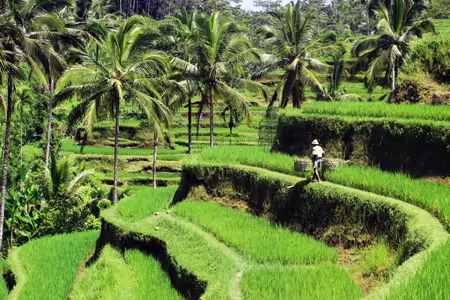
Bali has become synonymous with the digital nomad lifestyle, and Indonesia more broadly offers one of Asia's most compelling expat experiences. With a staggeringly low cost of living, warm year-round climate, lush landscapes, and a rich cultural backdrop, Indonesia draws remote workers, retirees, and adventurers from around the world.
Bali — particularly the areas of Canggu, Seminyak, and Ubud — has built world-class expat infrastructure: co-working spaces with fiber internet, international restaurants, yoga studios, private clinics, and a thriving community of like-minded people. Ubud in the island's interior offers a quieter, more culturally immersive experience for those prioritising nature and spiritual practice over beach nightlife.
Indonesia's visa system has improved significantly for long-stay visitors. The Second Home Visa (5–10 years) and the Digital Nomad E33G visa allow legal multi-year stays for qualifying applicants. Private healthcare in Bali is good at the major clinics, though serious conditions are often handled in Singapore or Kuala Lumpur. The overall cost of living is extraordinarily low — many expats live comfortably on $1,000–$1,500/month.
Expat cities in Indonesia

Frequently asked about living in Indonesia
What visa options are available for expats living in Bali or Indonesia long-term? +
Indonesia offers the Digital Nomad Visa (E33G) for remote workers, the Second Home Visa (5–10 years, requires $130K bank balance), the Retirement Visa (KITAS for retirees), and Social/Cultural visit visas. The B211A Visa on Arrival extension is popular for shorter stays. Immigration rules change frequently, so consulting a local visa agent is recommended.
How much does it cost to live in Bali as an expat? +
Bali is incredibly affordable by Western standards. You can live comfortably — with a nice villa, scooter, regular dining out, and gym membership — for $1,000–$1,800/month. Eating local food costs $1–3 per meal. Co-working space memberships run $100–$200/month. Canggu is slightly pricier than Ubud or Sanur.
Is healthcare in Bali good enough for expats? +
Bali has improved its medical infrastructure significantly. BIMC Hospital and Siloam Hospitals have modern facilities and English-speaking staff for most conditions. For serious illnesses or complex surgery, most expats fly to Singapore or Bangkok. Always carry international health insurance that covers medical evacuation — this is essential in Bali.
Is it safe to live in Bali as an expat? +
Bali is generally very safe for expats. Violent crime against foreigners is rare. Common concerns include petty theft in tourist areas, motorbike accidents (the most common cause of expat injury), and scams targeting tourists. Canggu and Ubud both have large, established expat communities where newcomers can quickly find their footing.
Can foreigners own property in Indonesia? +
Foreigners cannot directly own freehold (Hak Milik) land in Indonesia, but can own an apartment under the Hak Milik Satuan Rumah Susun scheme, or use long-term leasehold (typically 25–30 years with extensions). Many expats use a Hak Pakai title or work with a local nominee structure — always consult a licensed notaris before any property transaction.


