 Country Guide
 Living in El Salvador as an Expat
122 businesses across 2 cities, curated by the expat community
Why expats choose El Salvador
El Salvador is one of the most underrated expat destinations in Central America. The smallest and most densely populated country in the region, El Salvador has undergone a remarkable transformation over the past few years, with dramatically reduced crime rates, an improving business environment, and a government that has actively courted foreign residents with dollar-denominated banking and a friendly regulatory environment.
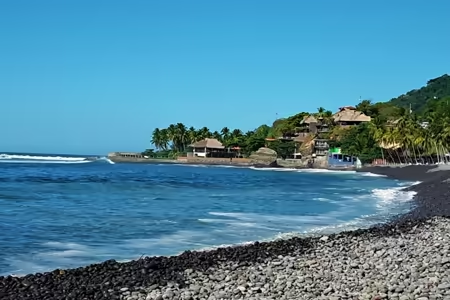
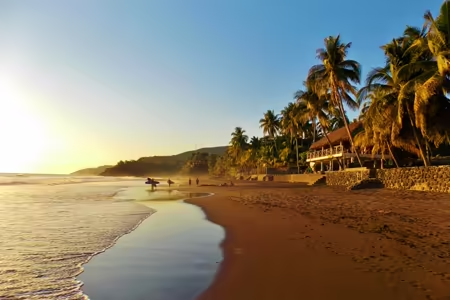
The Pacific coast, particularly the La Libertad department, has become a magnet for surfers and beach lovers. El Zonte, a small fishing village about 45 minutes from the capital, made international headlines as 'Bitcoin Beach', the world's first circular Bitcoin economy, and now draws a global community of tech-forward expats, entrepreneurs, and digital nomads. La Libertad itself is the commercial hub of the region with more infrastructure and a broader range of services.
El Salvador uses the US dollar and has adopted Bitcoin as legal tender, making it attractive for crypto-enthusiasts. The cost of living is low (one of the lowest in Central America) and the country's surf conditions are world-class along the entire Pacific coast. While infrastructure is more basic than in neighbouring Costa Rica or Panama, El Salvador's frontier appeal and genuine community spirit are drawing a growing wave of adventurous expats.
Expat cities in El Salvador
Frequently asked about living in El Salvador
What visa options are available for expats in El Salvador? +
El Salvador offers relatively liberal entry policies. Many nationalities receive 90-day tourist permits on arrival. Long-term options include Residency for Investors (minimum $1,000 monthly income or investment), Retirement Residency (Pensionado, minimum $1,000/month pension), and Temporary Residency through employment. El Salvador is part of the CA-4 agreement with Guatemala, Honduras, and Nicaragua, allowing regional travel.
How much does it cost to live in El Salvador? +
El Salvador is very affordable. Comfortable living in El Zonte or La Libertad costs $800-$1,500/month including rent, food, and transport. Local food at comedores costs $2-5 per meal. Rental prices vary widely. Beachfront properties command premiums, while inland options are very budget-friendly. El Salvador uses the US dollar, eliminating currency risk.
Is El Salvador safe for expats now? +
El Salvador's security situation has improved dramatically since 2022 under President Bukele's crime crackdown, which reduced the homicide rate from one of the world's highest to among the lowest in the region. Expat communities in El Zonte and La Libertad report feeling very safe. That said, maintain standard safety practices, avoid unfamiliar areas at night, and stay connected with the local expat community for current advice.
What is the Bitcoin situation in El Salvador? +
El Salvador made Bitcoin legal tender in 2021 alongside the US dollar. El Zonte's 'Bitcoin Beach' community pioneered circular Bitcoin usage and has an established network of merchants accepting crypto. While Bitcoin adoption among the general population is mixed, the crypto-friendly environment attracts a specific type of tech and finance-oriented expat. The government offers the 'Freedom Visa' for those investing $1M+ in Bitcoin.
What are the surfing conditions like in El Salvador? +
El Salvador's Pacific coast is consistently ranked among the world's best surf destinations. La Libertad's breaks, particularly Punta Roca, host international competitions. El Zonte has gentler waves suitable for learners, while more experienced surfers access breaks throughout the La Libertad coast. Surf season peaks during the dry season (November, April) but good waves exist year-round.


